


Milla Jovovich built an AI memory system.
It is 2026, and agents can code, which means everyone is building software. The number of new git repos is increasing exponentially, and Github is struggling to keep up.


Open source is r-selected now. What does this massive glut of new software mean?
A grim ferryman guards these floods and rivers, Charon, of frightful slovenliness; on whose chin a load of gray hair neglected lies; his eyes are flame: his vestments hang from his shoulders by a knot, with filth overgrown. Himself thrusts on the barge with a pole, and tends the sails, and wafts over the bodies in his iron-colored boat, now in years: but the god is of fresh and green old age. Hither the whole tribe in swarms come pouring to the banks, matrons and men, the souls of magnanimous heroes who had gone through life, boys and unmarried maids, and young men who had been stretched on the funeral pile before the eyes of their parents; as numerous as withered leaves fall in the woods with the first cold of autumn, or as numerous as birds flock to the land from deep ocean, when the chilling year drives them beyond sea, and sends them to sunny climes. They stood praying to cross the flood the first, and were stretching forth their hands with fond desire to gain the further bank: but the sullen boatman admits sometimes these, sometimes those; while others to a great distance removed, he debars from the banks.
– Virgil, Aeneid, VI. (Davidson translation)
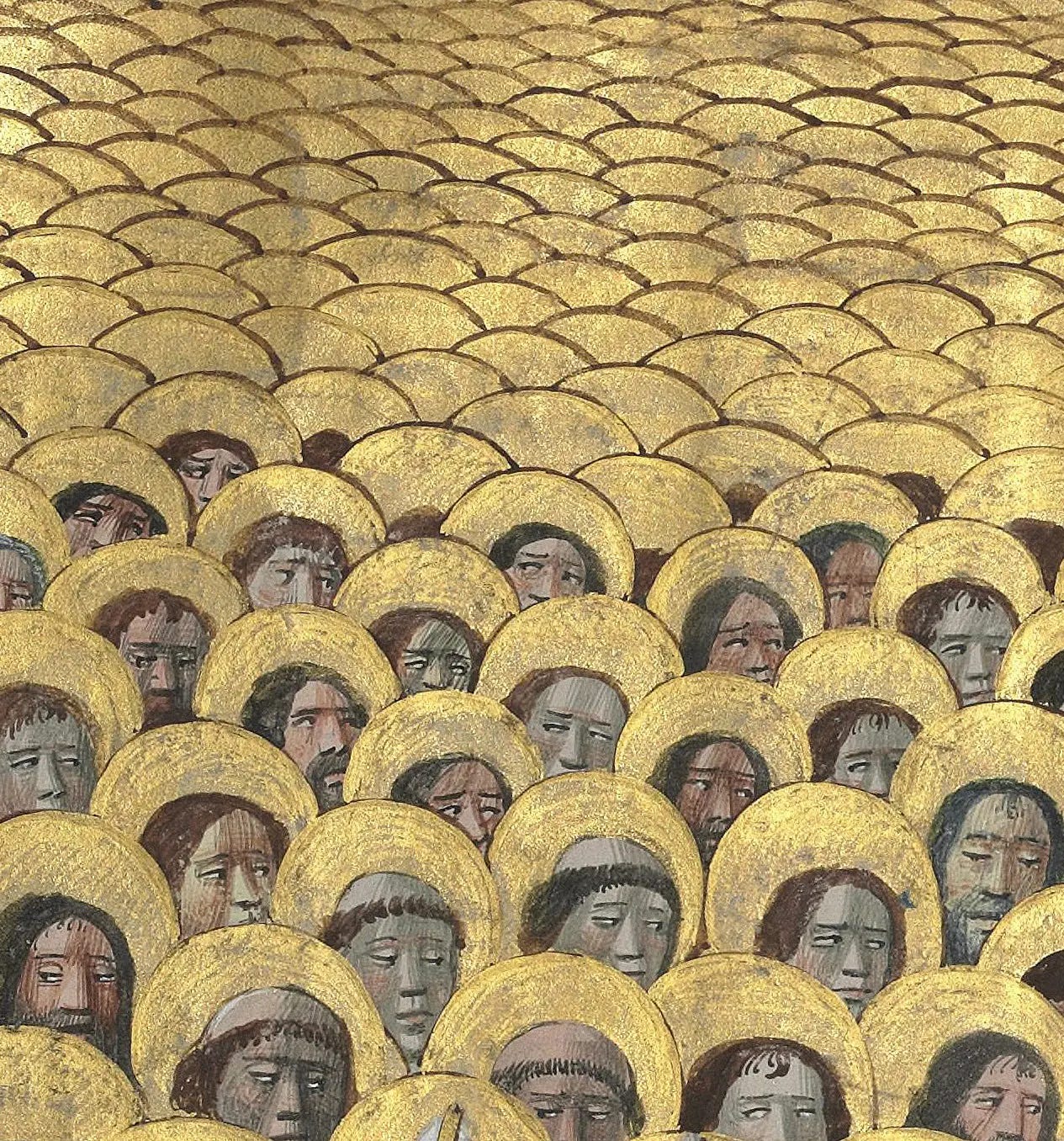
Every abundance creates new scarcities, because scarcity is not absolute, it is a difference between rates. As software goes from supply-constrained to demand-constrained, the scarcity shifts from creation to attention. Why should anyone notice you in the crowd?
What information consumes is rather obvious: it consumes the attention of its recipients. Hence a wealth of information creates a poverty of attention, and a need to allocate that attention efficiently among the overabundance of information sources that might consume it.
- Herbert A. Simon
This is what it takes for your free and open source project to be recognized in 2026: you must secure the endorsement of legendary actress Milla Jovovich. You know, like a celebrity vodka.
There is a fixed amount of scarce attention to go around, and too many people want it. The metagame becomes: secure attention by any means necessary. You can draw some attention by performing stunts, and you can direct attention with influencers or celebrity endorsements. However, the scale really kicks in when you secure distribution from a platform that owns users, a platform such as Facebook, Google, the App Store, or OpenAI. These platforms can push supply to create hits. Of course, this means platforms have extreme power over who lives and who dies. The platform becomes a kingmaker and can leverage control over demand to extract outsized taxes from supply.
Hal Varian recognized as much when he published his famous paper presaging the Google ads monopoly, but because this was the 90’s, and because the Berlin Wall had fallen, and because markets were going to fix everything, and because Google was Google, Hal Varian then designed the most mathematically efficient and fair ad auction system that is theoretically possible: the Georgist-land-tax-inspired Second-Price Vickrey Auction. Unfortunately, we are not in the 90’s anymore. The vibe is less policy wonks, more bad emperors. Expect strong power laws.